Crack the Code: The Delicious Science Behind Perfect Chocolate Truffles
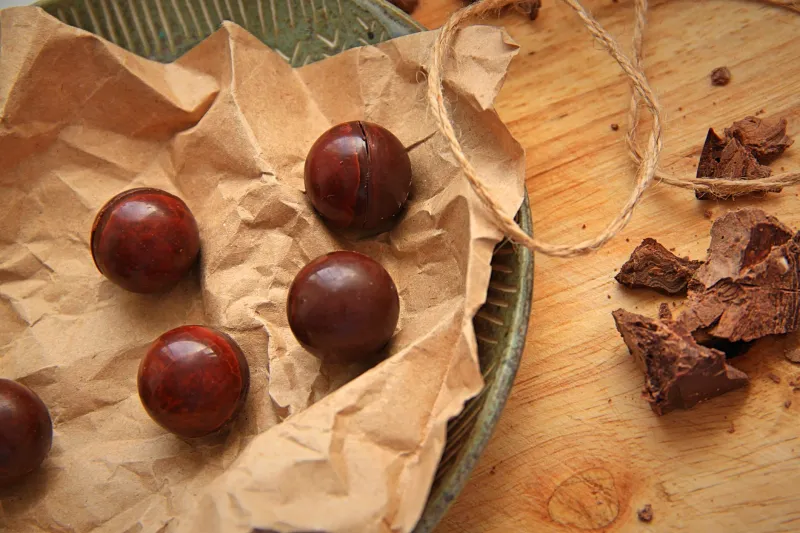
There's a moment — you know the one — when you bite through the shell of a really great chocolate truffle. There's that clean, satisfying snap. Then the ganache hits: smooth, rich, almost impossibly creamy. It melts before you've even finished chewing. For a split second, everything else in the world disappears.
That moment isn't magic. It's science. And once you understand what's actually happening inside that little round bonbon, you'll never look at a truffle the same way again.
It All Starts With Cocoa Butter (Seriously)
Here's the thing most people don't realize: chocolate is essentially a fat delivery system. The star of the show isn't sugar or even cocoa solids — it's cocoa butter, and specifically, how that fat behaves when it cools.
Cocoa butter is what scientists call a polymorphic fat, which is a fancy way of saying it can solidify into six different crystal structures depending on how it's handled. Only one of those structures — called Form V, or Beta crystals — gives you the glossy finish, the firm snap, and the smooth melt that define a professional-quality chocolate coating. The other five forms produce chocolate that's dull, crumbly, waxy, or weirdly soft. Not exactly what you're going for when you're crafting a $4 truffle.
This is why tempering exists. And this is what separates a grocery store truffle from something you'd find at a boutique chocolate shop in Manhattan or Portland.
Tempering: The Temperature Dance That Changes Everything
Ask any professional chocolatier what the most important skill in their arsenal is, and tempering will come up within the first two sentences. The process involves melting chocolate to a specific temperature (around 115°F for dark chocolate), cooling it down to roughly 81°F to encourage those desirable Beta crystals to form, and then gently bringing it back up to a working temperature of about 88–90°F. That precise reheat stabilizes the crystal structure so the chocolate behaves exactly the way you want it to.
Get any part of that wrong — even by a few degrees — and you end up with what chocolatiers call "bloom," those grayish streaks or dusty patches that signal fat or sugar has migrated to the surface. The chocolate still tastes fine, but that glossy shell? Gone.
Home cooks often skip tempering because it sounds intimidating, but here's a practical shortcut worth knowing: the seeding method. Melt about two-thirds of your chocolate, then stir in finely chopped, already-tempered chocolate (basically, a good-quality store-bought bar) until it melts completely. The existing Beta crystals in that added chocolate act as a template, encouraging the rest of the batch to fall into the right structure. A good instant-read thermometer is your best friend here — and honestly, a $15 investment that pays off immediately.
Ganache: Where Ratios Rule
If the shell is about crystal structure, the filling is about ratio. Ganache — that dreamy, molten center — is technically an emulsion of chocolate and cream. Getting it right is less about instinct and more about understanding how fat and water interact.
A standard truffle ganache uses roughly a 2:1 ratio of chocolate to cream by weight. That produces a firm-but-yielding texture that holds its shape when rolled but melts cleanly on the tongue. Shift toward more cream and you get a softer, more pourable ganache — great for tarts, not so great for a hand-rolled truffle that needs to survive being dipped in tempered chocolate without falling apart.
Temperature matters here too. Adding hot cream to chocolate that's too cold shocks the cocoa butter and breaks the emulsion, leaving you with a greasy, grainy mess. The fix? Make sure your chocolate is finely chopped so it melts evenly, and let the cream cool just slightly before combining. Some chocolatiers swear by using an immersion blender to finish the ganache — it forces a more stable emulsion and produces a noticeably silkier texture.
Flavor additions go in at this stage, and this is where American artisan chocolatiers are doing some genuinely exciting work.
American Chocolatiers Who Are Reinventing the Truffle
The truffle has come a long way from the classic dark chocolate and cream combination that French confectioners perfected decades ago. Across the US, a new generation of chocolatiers is treating the truffle as a canvas for bold, unexpected flavor combinations — and the results are worth seeking out.
Compartés in Los Angeles has built a cult following around truffles that lean into West Coast culture — think matcha and yuzu, or their fan-favorite churro caramel, which layers cinnamon and brown sugar into the ganache before finishing with a crunchy sugar shell. Founder Jonathan Grahm talks openly about treating chocolate like a chef treats a dish: layering flavors with intention rather than just adding ingredients for novelty.
Over on the East Coast, Raaka Chocolate out of Brooklyn takes an unroasted approach to their cacao, which produces a brighter, fruitier chocolate flavor profile that translates beautifully into their single-origin truffle collections. Their ganaches tend to be less sweet than conventional truffles, letting the natural complexity of the cacao shine through.
In Nashville, Olive & Sinclair has been quietly earning national attention for truffles that incorporate Southern pantry staples — sorghum, bourbon, and even a whisper of smoked sea salt — into ganaches that feel both deeply familiar and completely original.
What these makers have in common isn't just technique. It's an understanding that a great truffle is a conversation between science and storytelling.
Your Turn: Tips for Making Truffles at Home
Ready to try your own batch? Here's what will actually make a difference:
Use good chocolate. This isn't the place for baking chips. Look for bars with a cocoa percentage listed and a short ingredient list. Brands like Guittard or Valrhona are widely available at specialty grocery stores and make a noticeable difference.
Invest in a thermometer. Seriously. Eyeballing chocolate temperature is a gamble you don't need to take. A basic instant-read model works perfectly.
Chill your ganache properly. After mixing, press plastic wrap directly onto the surface of the ganache (this prevents a skin from forming) and refrigerate for at least two hours before rolling. Cold ganache is much easier to shape.
Roll quickly and work in small batches. Body heat is the enemy here. Roll your ganache balls fast, return them to the fridge between batches, and dip them in tempered chocolate when they're cold and firm.
Don't skip the finishing touch. A pinch of flaky sea salt, a dusting of cocoa powder, or a tiny sliver of candied orange peel on top isn't just decorative — it signals to whoever's eating your truffle that something intentional happened here.
The science behind a perfect truffle is genuinely fascinating, but the best part? Once you understand it, making them starts to feel less like following a recipe and more like conducting a delicious experiment. And at BonBon Me, we will always be here for that.
Now go melt some chocolate. You've got crystals to grow.