Your Brain on Bonbons: The Surprising Science of Why Premium Candy Hits Different
You've been there. You grab a handful of those bright, familiar candies from the office bowl, pop them one after another, and somehow feel less satisfied than when you started. Then, at a farmers market or a boutique chocolate shop, you bite into a single hand-rolled truffle — and you stop mid-sentence. You close your eyes. That's it. That's the one.
It's not just in your head. Well, actually — it is entirely in your head. And that's exactly the point.
The difference between reaching for a second artisan bonbon and mindlessly emptying a gas station candy bag comes down to some genuinely fascinating neuroscience. The way your brain processes flavor, texture, anticipation, and reward is deeply tied to complexity and craft. Premium candy makers, whether they know it or not, are essentially engineers of pleasure.
The Dopamine Loop (And Why It Loves Surprises)
Your brain's reward system runs on dopamine — the neurotransmitter that fires when you experience something pleasurable or, crucially, something unexpected. Dr. Rachel Kim, a food psychologist based in Chicago who consults with specialty food brands, puts it simply: "Mass-produced candy is engineered for consistency. Every piece tastes exactly like the last. That predictability actually blunts your dopamine response over time. Your brain stops being impressed."
Artisan candy, by contrast, is full of tiny variables. A sea salt caramel made in small batches might have a slightly different pull, a little more bitterness from the caramelization process, a flakier salt crystal on top. These micro-variations keep your brain engaged, almost like it's solving a delicious little puzzle with every bite.
Jordan Mercer, who runs Copper Kettle Confections out of Portland, Oregon, describes this intuitively even without the scientific framing: "When I'm pulling taffy or tempering chocolate, no two batches are truly identical. I think people taste that aliveness in handmade candy. There's something there that a machine can't replicate."
Flavor Complexity and the Pleasure of Layers
Mass-market candy tends to lead with a single, loud flavor note — pure sugar, artificial strawberry, straight chocolate — and that's largely where the experience ends. Artisan confections are built differently. They layer flavors that arrive in sequence, creating what food scientists call a "temporal flavor profile."
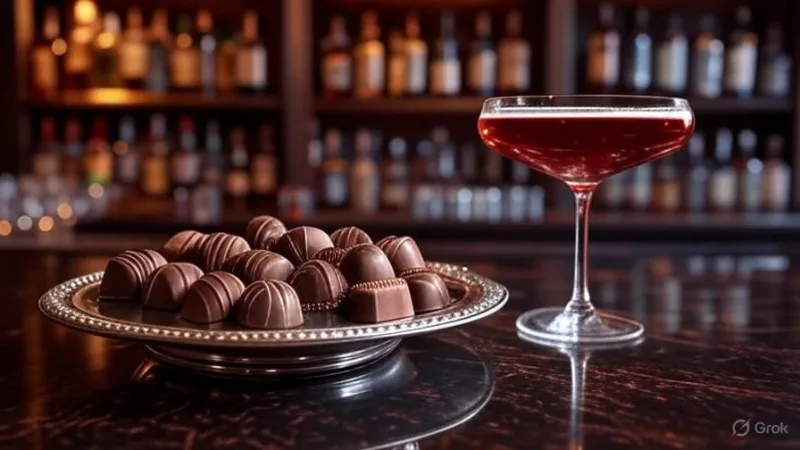
Think about a well-made dark chocolate bonbon filled with passion fruit ganache and finished with toasted coconut. The first sensation is the snap of the chocolate shell. Then comes the bright acidity of the fruit. Then the richness of the cream. Then the subtle nuttiness of the coconut lingers on the back of your palate. Your brain is processing multiple signals across several seconds, and it finds that deeply rewarding.
"Complexity keeps the brain in the experience longer," explains Dr. Marcus Webb, a sensory scientist who has worked with several specialty food companies. "With a simple candy, you process it and move on almost instantly. With a layered confection, you're engaged for a much longer window. That extended engagement registers as greater satisfaction, even if the portion size is smaller."
This is partly why people often report feeling "done" after one or two high-quality chocolates, while a bag of mass-market gummies can disappear without ever triggering that full signal.
Texture Is a Flavor (No, Really)
One of the most underappreciated elements of premium candy is texture — and the way it interacts with taste perception is genuinely wild. The crunch of a well-tempered chocolate shell, the slow melt of a butter caramel, the chew resistance of a hand-pulled nougat — these physical sensations send signals to your brain that are processed alongside flavor, amplifying the overall experience.
Research in sensory science has shown that people consistently rate the same flavor as more intense and more pleasurable when paired with a satisfying texture. It's why a silky ganache feels more luxurious than a waxy chocolate coating, even if the flavor profile is similar on paper.
Sophia Tran, co-founder of Little Gilt Chocolates in Austin, Texas, spends enormous amounts of time obsessing over exactly this. "I probably do thirty test batches before I'm happy with the snap on a new chocolate bar," she says. "People think snap is just about aesthetics. But it signals freshness, quality, proper tempering. Your brain reads all of that before you even taste anything."
The Ritual of Anticipation
Here's something candy psychology doesn't talk about enough: the experience begins long before the candy hits your tongue. The way a confection is packaged, presented, and even smelled primes your brain for what's coming — a process called sensory anticipation.
Unwrapping a beautifully packaged bonbon, reading a handwritten flavor note, seeing the careful hand-painted cocoa butter design on the surface — all of this is building anticipatory dopamine. Your reward system is already activated before you've taken a single bite.
Mass-market candy skips this almost entirely. The packaging is functional, the candy is uniform, and the whole interaction is designed for speed and volume. There's nothing wrong with that on its own terms. But your brain simply isn't as primed, and the experience reflects it.
"Presentation is part of the flavor," says Mercer. "When someone opens one of our gift boxes and takes a moment just to look at it — that pause is part of what we make. That's intentional."
Why Smaller Can Feel Like More
One of the most counterintuitive findings in candy psychology is that people consistently report higher satisfaction from smaller quantities of premium sweets compared to larger quantities of standard ones. This connects directly to what researchers call "hedonic adaptation" — the brain's tendency to get used to a repeated stimulus and stop responding as strongly.
When every candy in the bag tastes the same, your brain adapts quickly and the pleasure curve drops off fast. When each piece offers something slightly new — a different filling, a shift in intensity, an unexpected note — the adaptation slows down and the satisfaction stays high.
For artisan candy makers, this is actually great news. It means the case for quality over quantity practically makes itself, both emotionally and neurologically. Your brain already knows that one extraordinary bonbon is worth more than ten forgettable ones. It just needed the science to explain why.
Sweet Takeaway
The next time you find yourself lingering over a single piece of handcrafted candy, savoring it longer than seems reasonable, know that your brain is doing exactly what it's supposed to do. It's responding to complexity, to craft, to the tiny human variables baked into every batch. That's not indulgence for indulgence's sake. That's your reward system working beautifully.
Life really is sweeter with every bite — especially when the person making those bites knows a little something about joy.