Sweet on Their Own Terms: How Gen Z Is Flipping the Script on Candy Guilt
For decades, eating candy came with an unspoken asterisk. You enjoyed it, sure — but you also felt at least a little bad about it. "Guilty pleasure" wasn't just a phrase. It was practically a candy industry marketing category. Indulge, then feel vaguely terrible. Rinse, repeat.
Gen Z, it turns out, is not here for that narrative.
The generation currently reshaping everything from fashion to finance is bringing the same values-first lens to what they eat — including their sweets. And the results are pushing the candy industry into genuinely uncharted territory, where transparency, sustainability, and emotional authenticity matter just as much as whether something actually tastes good.
Spoiler: they still want it to taste really, really good.
The End of the Guilty Pleasure Era
The phrase "guilty pleasure" is built on a specific cultural assumption: that enjoyment of something indulgent is inherently something you should feel conflicted about. Gen Z, broadly speaking, rejects that framework. Mental health awareness, body-positive movements, and a general pushback against shame-based marketing have created a generation that would rather simply enjoy something intentionally than apologize for liking it.
This shows up clearly in how younger consumers talk about candy. Rather than "I shouldn't, but..." the language has shifted toward "I choose this, and here's why it works for me." That's not a small semantic shift. It represents a fundamental change in the relationship between consumer identity and food choices.
"We don't use guilt-based language anywhere in our branding," says Maya Chen, founder of Bloom Candy Co., a clean-label confectionery startup based in Denver that targets a younger demographic. "Our customers want to feel good about what they're eating — not just in the moment, but about where it came from, how it was made, what's in it. Guilt isn't part of that conversation."
Clean Labels, Loud Flavors
One of the clearest expressions of this shift is the explosion of what the industry calls "clean-label" candy — confections made without artificial colors, synthetic flavors, high-fructose corn syrup, or preservatives that require a chemistry degree to pronounce. The demand is coming hard from younger shoppers, and brands are responding.
But here's where it gets interesting: Gen Z isn't asking for bland. They want clean AND bold. Fruit-forward caramels sweetened with real juice. Gummies colored with beet powder and turmeric. Chocolate bars with adaptogenic mushrooms, collagen peptides, or ashwagandha built right in. The functional ingredient trend — long a fixture of the wellness supplement world — has fully arrived in candy, and it's being embraced enthusiastically by consumers who see no contradiction between "treat" and "intentional."
Brands like Behave (soft, low-sugar gummies made with real fruit), SmartSweets (fiber-rich candy alternatives), and a growing roster of small-batch artisan makers are capturing this space. Their social media presence skews heavily toward TikTok and Instagram, where younger consumers aren't just buying products — they're sharing values.
"The ingredient list IS the marketing now," says food industry analyst James Okafor, who tracks emerging consumer trends in specialty food. "For Gen Z, a short, recognizable ingredient list signals trust. And trust is the currency that brand loyalty is built on."
Packaging That Doesn't Cost the Planet
If the inside of the candy is getting a conscious makeover, the outside isn't far behind. Zero-waste and minimal-packaging innovations are becoming a genuine differentiator in the premium candy space, particularly for younger shoppers who grew up with climate anxiety as a constant backdrop.
Some brands are experimenting with compostable wrappers made from plant-based cellulose. Others are moving toward refillable tin containers or paper-based packaging that can be recycled without special facilities. A handful of online candy retailers have built entire subscription models around packaging-free shipping, using biodegradable filler and plant-based inks on their boxes.
This isn't just idealism. It's increasingly a purchasing factor. A 2023 survey by the Specialty Food Association found that over 60% of consumers under 30 said sustainable packaging would make them more likely to try a new food brand — even if the price point was slightly higher.
For smaller artisan candy makers, this actually levels the playing field. "We can't compete with a major candy corporation on volume or price," admits Tara Nguyen, who runs a small confectionery out of Nashville called Petite Praline. "But we can compete on values. Our packaging is fully compostable, we source our sugar from a fair-trade cooperative, and we tell that story clearly. That matters to our customers in a way it never did five years ago."
The Emotional Connection Isn't Going Anywhere
Here's the thing: for all the talk of ingredients and sustainability, Gen Z hasn't actually abandoned the emotional core of candy culture. The nostalgia, the ritual, the comfort of something sweet — that's as present as ever. What's changed is the expectation that a brand can deliver all of that AND be worth feeling good about.
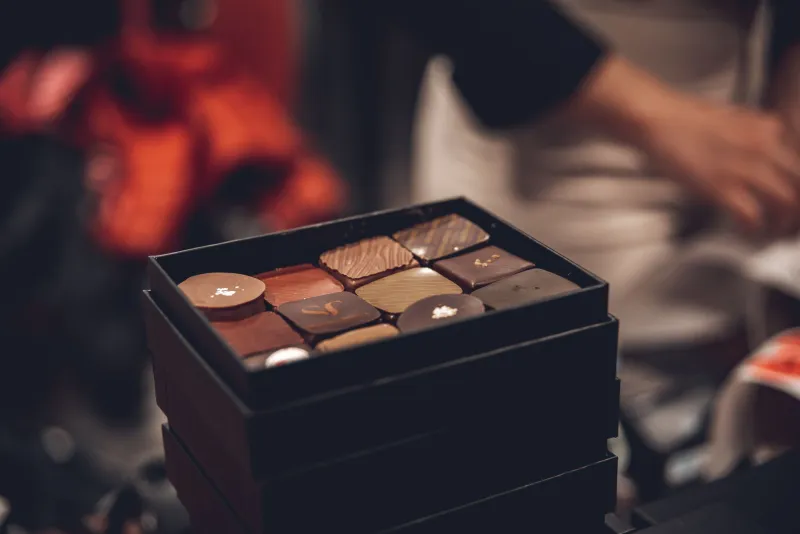
This creates a fascinating dynamic for artisan candy makers who can authentically tell both stories at once. A hand-pulled lollipop made with organic cane sugar and real fruit extract can be both a genuinely joyful treat AND a values-aligned purchase. A small-batch chocolate bar with ethically sourced cacao can be both delicious and meaningful. The either/or is dissolving.
Social platforms have accelerated this beautifully. On TikTok, candy content that combines sensory appeal (the crunch, the melt, the pull) with behind-the-scenes transparency (here's where our ingredients come from, here's how we make it) performs consistently well. Younger audiences aren't just watching — they're building emotional relationships with brands that feel honest.
What This Means for the Candy Aisle
The ripple effects are starting to reach even the major players. Large candy companies have been quietly reformulating products, phasing out artificial dyes, and launching "better for you" sub-brands at a pace that would have seemed unlikely a decade ago. The pressure from a younger, more demanding consumer base is real.
But the real energy — the genuine innovation — is happening at the artisan level, where small makers can pivot quickly, source intentionally, and build direct relationships with customers who care about the whole story.
For Gen Z, candy isn't a guilty pleasure. It's a considered one. And honestly? That sounds like a pretty sweet deal for everyone.