A Box Full of Joy: The Delicious History Behind America's Most Beloved Chocolate Gift
A Box Full of Joy: The Delicious History Behind America's Most Beloved Chocolate Gift
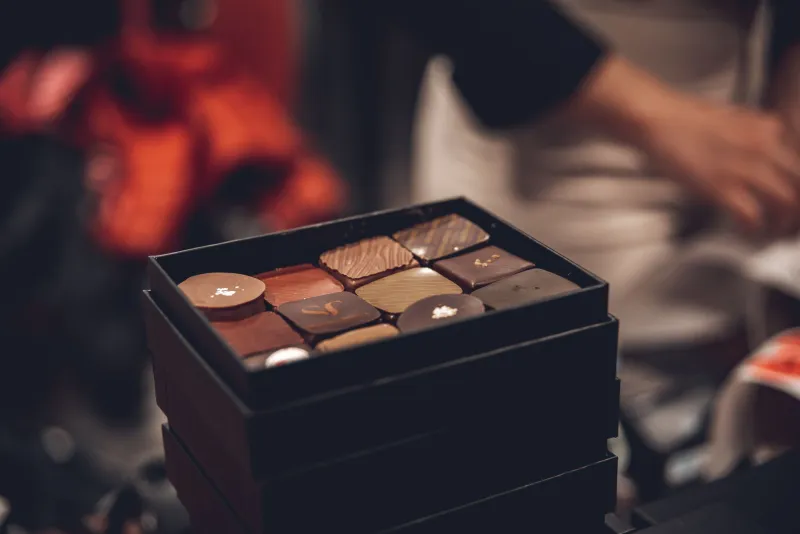
There's a particular kind of magic that happens when someone hands you a box of chocolates. Before you've even lifted the lid, something shifts. Maybe it's the weight of the box in your hands, or the rustle of the ribbon, or just the quiet promise that something wonderful is tucked inside. Whatever it is, that feeling has been going strong for more than 150 years — and honestly, it shows no signs of slowing down.
The boxed chocolate assortment is one of those rare gifts that never really goes out of style. It works for Valentine's Day, Mother's Day, birthdays, holidays, hostess gifts, apologies, celebrations, and everything in between. But how did a box of mixed chocolates become the go-to gesture of sweetness and affection? The story is richer than most people realize.
It All Started Across the Atlantic
Credit where it's due: the British really started something when Richard Cadbury introduced the first commercially produced heart-shaped chocolate box back in 1861. Cadbury had figured out how to use the pure cocoa butter byproduct from his manufacturing process to create a smoother, more luxurious eating chocolate — and he needed an elegant way to package and sell it. Decorative tins and boxes, often adorned with paintings of cherubs and flowers, became the vessel of choice.
Victorian consumers loved them. The boxes themselves were so beautiful that people saved them long after the chocolates were gone, using them to store love letters, buttons, and keepsakes. Gifting a box of chocolates became a gesture layered with meaning — romantic, refined, and just indulgent enough to feel like a genuine treat.
By the early twentieth century, the tradition had made a full and enthusiastic crossing to the United States, where American candy makers were eager to put their own stamp on it.
Whitman's, See's, and the American Chocolate Box Story
If you grew up in the US, there's a good chance a yellow Whitman's Sampler has appeared somewhere in your family history. Founded in Philadelphia in 1842, Whitman's became one of the first American companies to package chocolates in a branded gift box — and their iconic Sampler, introduced in 1912, essentially defined what a boxed chocolate assortment looked like for generations of Americans. The cross-stitch pattern on the lid is one of the most recognized pieces of candy packaging in the country. That little paper guide tucked inside the box, mapping out which chocolate is which? Also a Whitman's innovation. Genius.
Out on the West Coast, a different kind of chocolate legend was taking shape. See's Candies opened its first shop in Los Angeles in 1921, founded by Charles See and inspired by his mother's home candy recipes. See's built its reputation on fresh ingredients, a clean black-and-white aesthetic, and an almost fanatical commitment to quality. When Warren Buffett's Berkshire Hathaway acquired the brand in 1972, Buffett famously called it his favorite business of all time. The See's box — with its signature white bow and cheerful assortment of milk and dark chocolate pieces — became a California institution that eventually spread nationwide.
These two brands, different in personality and geography, helped cement the boxed assortment as a cornerstone of American gifting culture. They made the ritual feel accessible without sacrificing the sense of occasion.
The Ritual Is the Point
Here's what's interesting about a box of chocolates compared to, say, a single candy bar: it's designed to be an experience, not just a snack. The act of choosing — peering at the guide, debating between the caramel and the raspberry cream, saving your favorite for last — is half the pleasure. There's a social dimension to it too. Boxes get passed around tables, shared at holiday gatherings, opened slowly over several days with deliberate little moments of indulgence.
That intentionality is part of why the format has endured. A box of chocolates communicates something that a bag of candy just doesn't. It says: I thought about you. I wanted to give you something worth savoring.
How Artisan Chocolatiers Are Rewriting the Playbook
Fast forward to today, and the classic boxed assortment is getting a serious — and seriously delicious — upgrade. A new wave of American artisan chocolatiers is taking the format and running with it in wildly creative directions, turning the traditional sampler into something closer to a curated tasting menu.
Shops like Compartés in Los Angeles, Vosges Haut-Chocolat in Chicago, and Recchiuti Confections in San Francisco are crafting boxes that tell a story with every piece. We're talking collections built around a single origin cacao, regional flavor profiles featuring local ingredients like Pacific Northwest hazelnuts or Southern sorghum, or themed assortments inspired by everything from cocktail culture to the seasons. The packaging has leveled up too — think magnetic closure boxes lined in velvet, hand-illustrated wrapping, and minimalist designs that feel more like luxury fashion than candy.
Many of these makers include tasting notes alongside their chocolates, encouraging the kind of thoughtful, unhurried appreciation you'd bring to a fine wine or a craft cheese board. It's a shift that reflects a broader cultural appetite for knowing the story behind what we eat — where it came from, who made it, and why it tastes the way it does.
Subscription boxes have also given the format a modern twist, delivering rotating assortments of small-batch chocolates from makers across the country directly to people's doors each month. For chocolate lovers, it's an ongoing adventure — a new box, a new set of flavors, a new reason to slow down and pay attention.
The Box That Keeps on Giving
What's remarkable is how the boxed chocolate assortment has managed to be both timeless and endlessly adaptable. The core idea — a beautiful container filled with a thoughtful variety of chocolate pieces, meant to be given and shared — hasn't really changed since Cadbury started decorating those Victorian tins. What has changed is the range of what's possible inside.
Today you can find a box of chocolates filled with single-origin dark pieces from a small-batch maker in Brooklyn, or a collection of regional flavors from a chocolatier in New Orleans, or a globally inspired assortment from a shop in your own neighborhood. The ritual of giving and receiving is the same. The pleasure of choosing your first piece is the same. The little thrill of lifting the lid is absolutely, deliciously the same.
Some things just get better with time — and a beautifully assembled box of chocolates is living proof.