Every Bonbon Has Something to Say: How America's Best Chocolatiers Turn Flavor Into Story
Every Bonbon Has Something to Say: How America's Best Chocolatiers Turn Flavor Into Story
Pick up a bonbon and you're holding something that probably took its maker longer to conceptualize than it did for you to eat it. That's not a criticism — it's kind of the whole point. The best artisan chocolatiers in the US will tell you that flavor development isn't really about what tastes good together. It's about what means something together.
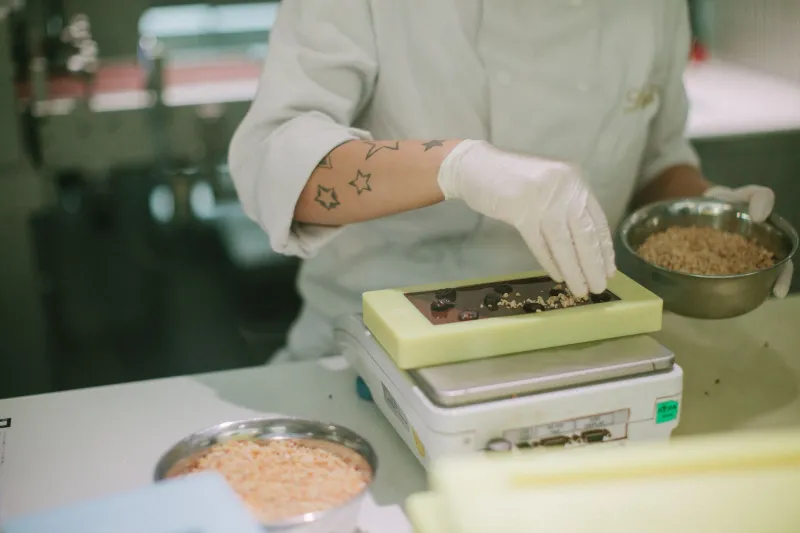
We talked to a handful of makers across the country about the surprisingly personal, occasionally obsessive, and deeply intentional process of building a bonbon collection from scratch. What we found is that every single piece in a well-curated box has a story — and once you know how to listen, chocolate starts to sound a lot like a conversation.
The Box as a Narrative Arc
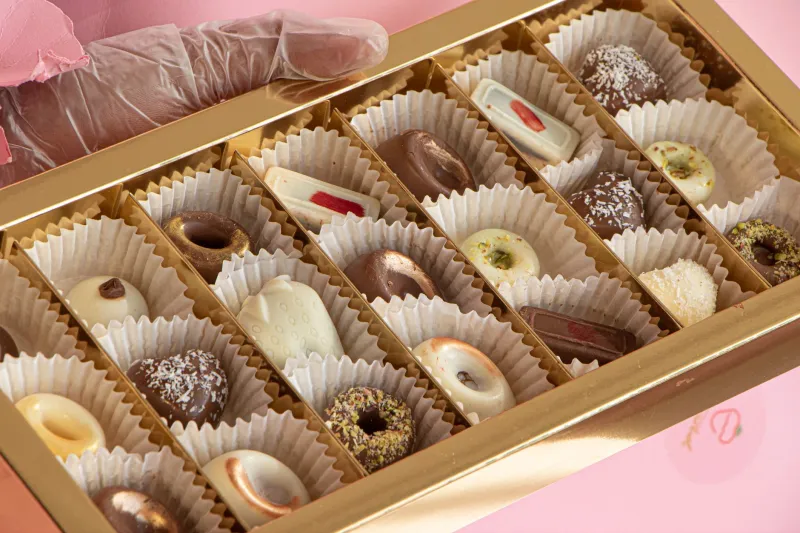
Think about the last time you opened a beautifully arranged box of bonbons. Did you eat them in order, or did you go straight for the one with the most dramatic swirl on top? Most of us are grabbers. But many artisan chocolatiers design their collections with sequence in mind — a beginning, a middle, and an end.
Dana Brewster, who runs a small-batch chocolate studio in Portland, Oregon, describes her seasonal collections as "edible short stories." Her spring box opens with a light, floral piece — usually a honey-lavender ganache made with Oregon wildflower honey — and moves progressively toward deeper, more complex flavors, closing with a dark chocolate and smoked sea salt caramel that she calls the "period at the end of the sentence."
"I want people to feel something shift as they go through the box," she says. "Not just in flavor, but in mood. You start bright and curious, and you end grounded and satisfied."
This kind of intentional sequencing is more common than most candy lovers realize. It borrows from the world of fine dining — the idea of a tasting menu — and applies it to something small enough to hold between two fingers.
Regional Ingredients as a Love Letter to Place
For many makers, the most powerful stories they tell are geographic ones. Using locally sourced ingredients isn't just a sustainability choice — it's a way of encoding a specific landscape into a piece of candy.
Marco Delgado, who founded his chocolate company in San Antonio, Texas, draws heavily from the flavors of the Texas Hill Country and his own Mexican-American heritage. His signature collection includes a piece built around piloncillo — the unrefined cane sugar used widely in Mexican cooking — combined with a touch of ancho chile and a single roasted pepita pressed into the top.
"That bonbon is basically my grandmother's kitchen," he says simply. "Every ingredient in it has a memory attached to it."
He's careful to point out that the goal isn't nostalgia for its own sake. The flavors have to work in a contemporary context — the chocolate has to be balanced, the heat has to be calibrated, the texture has to be right. But the inspiration is deeply personal, and he believes that comes through in the eating.
Up in Vermont, chocolatier Priya Anand takes a different approach to place-based storytelling. Her collections shift with the agricultural calendar, meaning the flavors available in October look nothing like what she makes in June. A fall collection might feature maple syrup from a farm ten miles from her studio, combined with roasted butternut squash and a whisper of cardamom. "I want the box to feel like the season you're in," she explains. "Not a simulation of it — the actual thing."
The Naming Game: More Than Just Pretty Words
Ask an artisan chocolatier what they find most challenging, and a surprising number will say: naming the pieces.
It sounds trivial until you realize how much a name shapes the eating experience. Research in sensory psychology has shown that expectation influences perception — if you're told a bonbon tastes like "morning fog over the Cascades," you'll approach it differently than if the card just says "Earl Grey and blackberry."
Jasmine Okafor, who makes bonbons out of a studio in Atlanta, Georgia, leans hard into evocative naming. Her pieces have titles like Porch Swing, First Rain, and Sunday Slow. Each name is chosen after the flavor is fully developed — she tastes the finished piece repeatedly before she decides what it reminds her of.
"The name is the last layer of flavor," she says. "It primes you. It tells you how to feel before you even bite in."
She's also thoughtful about cultural resonance. Several of her pieces are named for concepts or phrases from her Nigerian heritage — a way of honoring that part of her identity without turning it into a marketing gimmick. "It's not about educating anyone," she clarifies. "It's just about being honest about where I come from."
Pairing as Dialogue
Beyond individual pieces, the relationship between flavors in a collection is something the best chocolatiers think about carefully. If one piece is citrus-bright and acidic, what does it need next to it — something creamy and cool to balance it out, or something equally bold to create tension?
Dana Brewster describes this as "designing a conversation." She sketches out her collections on paper before she makes a single piece, mapping out which flavors will be in dialogue with each other and which ones need a little breathing room.
Marco Delgado thinks about contrast differently. "In Mexican cooking, you have this tradition of combining things that seem like they shouldn't work — sweet and savory, hot and cool, bitter and rich. I try to bring that sensibility into the box. I want people to be a little surprised."
That element of surprise, multiple makers told us, is part of the story too. A bonbon that subverts your expectations — that tastes nothing like you thought it would from the outside — is telling you something about assumptions and discovery.
Why It Matters That You Know This
Here's the honest truth: you don't have to know any of this to enjoy a great bonbon. Pleasure doesn't require context. But there's something genuinely special about understanding that the piece you're eating was the result of weeks of tasting, dozens of discarded combinations, and one person's very specific memory of a specific place or moment.
It changes the eating. It slows you down. It makes you curious about what you're tasting rather than just whether you like it.
And that, really, is what artisan chocolate is inviting you to do — not just consume something sweet, but actually experience it. The makers we spoke to aren't precious about it. They want you to enjoy yourself. But they also put a lot of themselves into those little shells, and if you're paying attention, you'll taste exactly that.
Next time you open a box of bonbons, try eating them in order. Read the flavor card first. Let the name sit in your mind for a second before you bite. You might be surprised how much more there is to hear.