Old Candy, New Tricks: The Chefs and Bartenders Turning Nostalgic Sweets Into Fine Dining Gold
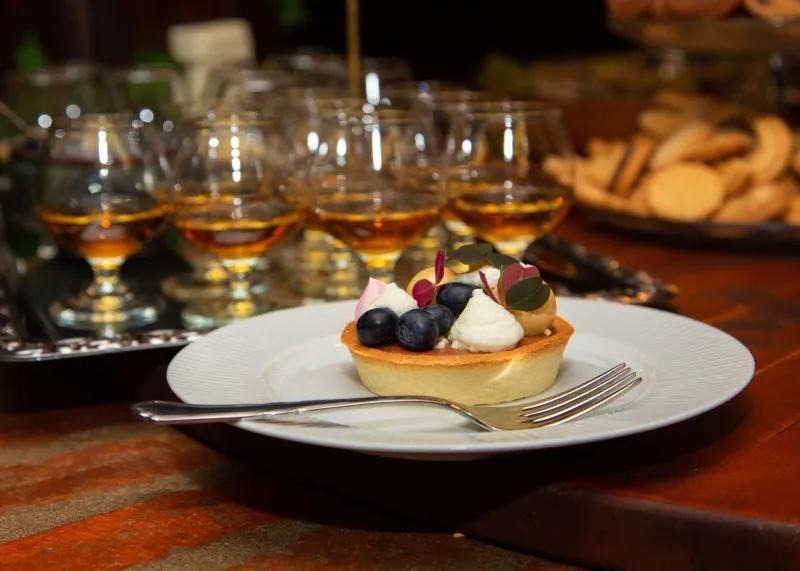
The menu at a certain upscale Nashville restaurant features a dessert listed simply as "Campfire." What arrives at the table is an architectural marvel: a smoked vanilla mousse, a thin tuile of caramelized sugar, a ribbon of salted caramel, and — tucked beneath it all — a layer of crushed Bit-O-Honey candy, its distinctive almond-honey flavor playing against the smoke and salt like a memory you can't quite place.
That's the whole point.
Across the country, a wave of creative chefs and mixologists is doing something unexpected with the candy aisle: treating it like a pantry. Not as a gimmick or a nostalgia play, but as a genuine ingredient source — one that comes loaded with complex flavors, reliable chemistry, and an almost unbeatable emotional resonance. Vintage American candies, it turns out, have a lot more to say than their humble origins suggest.
The Candy Pantry Gets Serious
Chef Dominic Reyes runs the kitchen at a contemporary American restaurant in Denver where he's earned a reputation for what he calls "memory-driven cuisine" — dishes that deliberately trigger specific emotional associations through flavor. Candy has become central to his approach.
"People think of candy as simple," he says. "But when you actually break down the flavor profiles of classic American candies, they're often incredibly sophisticated. Butterscotch has this deep, almost scotch-like richness. Good licorice has an anise complexity that rivals any spice I'd buy from a specialty importer. These things were developed over decades. There's real craft in them."
Reyes recently introduced a duck breast dish finished with a Red Hots–infused pan sauce — the cinnamon heat of the candy providing a warmth that he says no spice blend has been able to replicate as cleanly. "It's consistent, it's already dissolved, and it carries a flavor memory that makes people lean into the dish before they even take a bite."
That last part — the flavor memory — is what keeps coming up in conversations with chefs and bartenders who are working with candy. The emotional pre-loading that nostalgic sweets carry is a genuine culinary tool, one that fine dining has been slow to acknowledge but is now embracing with real enthusiasm.
The Bartender's Secret Weapon
If chefs are discovering candy's savory potential, bartenders got there first. Mixologists across the country have been experimenting with candy as a cocktail ingredient for years, and the results range from playful to genuinely sophisticated.
Lena Marchetti, head bartender at a craft cocktail bar in Chicago's River North neighborhood, has built a small cult following around her candy-forward menu. Her current signature drink — a riff on a sour called "The Schoolyard" — uses a house-made syrup built from dissolved Lemonheads, fresh lemon juice, and a touch of white rum, finished with a salted rim made from crushed sour sugar.
"The Lemonhead syrup is intense in the best way," she says. "It has this sharp, almost aggressive lemon flavor that fresh juice alone doesn't give you. There's something about the way those candies are formulated — the citric acid balance, the sweetness level — that translates incredibly well into a cocktail context."
Marchetti also keeps a jar of Werther's Originals on her back bar, which she uses to make a butterscotch-infused bourbon that has become a menu staple. "It sounds ridiculous until you taste it," she laughs. "Then it sounds like the most obvious thing in the world."
Over in New York City, bartender James Osei at a Lower East Side speakeasy has taken things further, developing a Pop Rocks–garnished Champagne cocktail that he describes as "the most fun thing I've ever put on a menu." The crackling sensation as the candy dissolves in the sparkling wine creates a multi-sensory experience that his guests find genuinely surprising — and, he notes, deeply Instagrammable. "But it's not just a visual trick. The slight tartness of the Pop Rocks actually balances the sweetness of the cocktail. It's doing real flavor work."
Candy Corn Gets a Redemption Arc
Few American candies are more polarizing than candy corn. But Chef Amara Patel of a Philadelphia tasting menu restaurant has made it her mission to rehabilitate the much-maligned Halloween staple — and she might be succeeding.
"Candy corn is basically a honey-vanilla-marshmallow flavor system," she explains. "When you melt it down and incorporate it into a sauce or a glaze, you lose the waxy texture that people hate, and what you're left with is actually a really lovely, complex sweetness."
Patel uses a candy corn reduction as part of a glaze for roasted carrots — a dish that has quietly become one of her most-requested menu items. The sweetness amplifies the natural sugars in the carrot while the vanilla note adds a warmth that plays beautifully against the char from the oven. "It's not a joke dish," she says firmly. "It's a serious preparation that happens to use an ingredient people underestimate."
The Nostalgia Economy
There's a broader cultural conversation happening here, one that extends well beyond the kitchen. Nostalgia has become a genuine economic force in American food and beverage, with consumers increasingly drawn to experiences that connect them to specific memories and emotions. Fine dining, long resistant to anything that smacked of sentimentality, is catching up.
Using vintage candy as a culinary ingredient is, in a sense, the ultimate expression of this shift. It takes something deeply familiar — something almost everyone has a personal history with — and recontextualizes it in a way that is simultaneously surprising and comforting. The effect is a kind of double pleasure: the intellectual delight of encountering a classic ingredient in an unexpected context, and the emotional warmth of the memory it triggers.
"That's the magic of it," says Chef Reyes. "You take a bite and there's this half-second where your brain goes, wait, I know this. And then it catches up to where it is — this beautiful, composed dish — and the two things exist together. That gap between recognition and surprise is where the real experience lives."
Finding the Candy Aisle at the Chef's Table
Not every candy translates to the fine dining context, and the chefs and bartenders doing this work are quick to acknowledge that. The failures, they say, are instructive. Some candies are too artificial in their flavoring to survive heat. Others are too sweet without enough complexity to balance. The ones that work tend to have genuine flavor depth — real vanilla, actual fruit acids, true caramel — that holds up under culinary scrutiny.
But the ones that work? They work beautifully. And they're changing the way a new generation of culinary professionals thinks about the humble candy aisle — not as a place for kids, but as a resource full of untapped possibility.
Life is sweeter with every bite. Turns out, that includes the ones you eat at tables with cloth napkins.