When Sugar Becomes Sculpture: Inside America's Most Breathtaking Edible Art Movement
When Sugar Becomes Sculpture: Inside America's Most Breathtaking Edible Art Movement
There's a moment, somewhere around 320 degrees Fahrenheit, when sugar stops being an ingredient and becomes something else entirely. It flows like lava, glows like amber, and — in the right hands — transforms into something that looks less like food and more like a dream someone forgot to wake up from. Delicate blown sugar roses with petals thin enough to see light through. Pulled sugar ribbons that spiral upward like frozen silk. Poured isomalt landscapes that mimic stained glass windows in a cathedral.
This is the world of sugar art, and right now, it's having a serious moment in America.
More Than Decoration — This Is a Discipline
Sugar artistry isn't new. European pastry traditions have long revered the craft, and classically trained chefs have been pulling sugar in competition kitchens for decades. But what's changed in the US is who's doing it, where it's showing up, and how seriously the broader food world is starting to take it.
A growing wave of American pastry artists — some with formal culinary degrees, others entirely self-taught — are pushing the boundaries of what sugar can do. They're not just decorating cakes. They're building freestanding sculptures, creating installation-worthy centerpieces, and even staging pop-up exhibitions where the art just happens to be edible.
The difference between a decorated dessert and sugar art, as many of these creators will tell you, comes down to intention. "Anyone can pipe a border," says one Chicago-based pastry chef who spent years training in France before returning to the US to open her own sugar studio. "But when you're pulling sugar, you're working with a living material. It's constantly changing. You have maybe three minutes to shape something before it hardens, and you can't undo it. That's what makes it art."
The Materials: Isomalt, Pulled Sugar, and Blown Sugar Explained
If you're new to this world, the terminology can feel a little intimidating. Here's a quick breakdown of the main techniques you'll see sugar artists using.
Isomalt is a sugar substitute derived from beet sugar that's become a go-to for modern sugar artists. It's more stable than regular sucrose, less prone to humidity-related cloudiness, and produces a crystal-clear finish that's ideal for jewel-like decorations and translucent sculptures. You've probably seen it all over social media — those glittery, gem-shaped cake toppers and glossy sugar shards? Almost certainly isomalt.
Pulled sugar is exactly what it sounds like: cooked sugar that's been aerated by repeatedly folding and stretching it, creating a satin-like sheen. Artists use it to form ribbons, flowers, leaves, and abstract shapes. The process requires speed, temperature control, and a lot of practice — the sugar must stay warm enough to be workable but cool enough to hold its shape.
Blown sugar takes things even further. Using a small pump, artists inflate a ball of cooked sugar like a balloon, shaping it with their hands as it expands. The result is hollow, impossibly delicate, and genuinely astonishing to watch. Think hand-blown glass, but edible.
The Artists Rewriting the Rules
Across the country, a handful of names keep coming up when people talk about where sugar art is heading.
In New York, there are pastry artists who've made names for themselves creating sugar installations for luxury hotel lobbies and high-end events — pieces that guests photograph before (and sometimes instead of) eating. In Los Angeles, a self-taught creator who started by watching competition cooking shows has built a six-figure business making custom sugar sculptures for celebrity events, her work regularly going viral on Instagram for its almost surreal realism.
In the South, a New Orleans-based artist has found a way to merge traditional Creole confectionery aesthetics with contemporary sugar sculpture, incorporating praline textures and chicory-brown color palettes into pieces that feel deeply rooted in place. And in the Pacific Northwest, a former graphic designer turned pastry chef is using sugar art as a medium for environmental storytelling — her coral reef sculptures, made entirely from blown and pulled sugar, have been featured in food and design publications alike.
What connects all of them isn't just skill. It's a shared belief that sugar deserves to be taken seriously as a creative medium — and that the line between the pastry kitchen and the artist's studio doesn't have to exist at all.
Why It's Going Mainstream (Sort Of)
Sugar art has always had a presence in professional pastry competition, from the legendary showpieces at the National Pastry Team Championship to the dramatic sugar work on shows like "Bake Off" and "Sugar Rush." But what's different now is accessibility.
TikTok and Instagram have given sugar artists an enormous platform, and audiences are genuinely obsessed. Videos of isomalt being poured into molds, sugar being pulled under heat lamps, or a blown sugar sphere being shaped in real time rack up millions of views. People aren't just watching — they're inspired. Online courses, sugar art kits, and beginner-friendly tutorials have created a whole new community of home enthusiasts who are picking up the craft for the first time.
The tools are more available than ever, too. Isomalt is easy to order online. Sugar thermometers are inexpensive. Heat lamps designed specifically for sugar work are marketed directly to home bakers. The barrier to entry has dropped significantly, even if mastery still takes years.
Try It Yourself: Where Beginners Should Start
If this world has you itching to experiment — good. You don't need a professional kitchen or a culinary degree to dip your toes in. Here's how to start without overwhelming yourself.
Start with isomalt gems. Pre-colored isomalt nibs are widely available and incredibly beginner-friendly. Melt them, pour them into silicone gem molds, and let them set. The results look stunning on cakes and cupcakes, and the process teaches you how isomalt behaves under heat.
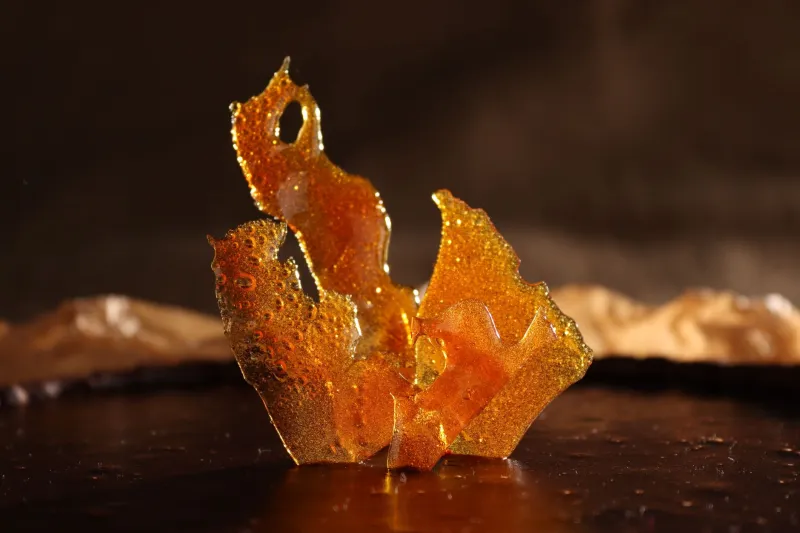
Try a simple poured sugar shard. Cook regular sugar to hard crack stage (around 300–310°F), add gel food coloring, and pour it onto a silicone mat in thin, irregular shapes. Once cooled, you'll have beautiful, glassy shards that make incredible cake decorations.
Watch before you do. Seriously — spend time watching sugar artists work before attempting pulled or blown sugar. Understanding how the material moves, how it responds to temperature, and what warning signs to look for will save you a lot of frustration (and burned fingers).
Invest in a good thermometer. This is non-negotiable. A reliable digital candy thermometer is the single most important tool in sugar work. Don't skip it.
Be patient with yourself. Sugar art has a steep learning curve. Your first attempts won't look like the Instagram videos, and that's completely fine. Every cracked shard and lopsided ribbon is teaching you something.
The Sweetest Kind of Art
There's something uniquely powerful about an art form that disappears. Sugar sculptures don't last forever — humidity, heat, and time conspire against them. In a way, that impermanence is part of what makes them so compelling. You're not just looking at something beautiful. You're looking at something that took hours to create and might be gone by morning.
Maybe that's why sugar art feels so alive right now. In a world that's increasingly digital and permanent, there's something deeply human about making something gorgeous, fragile, and fleeting — and then, if you're lucky, getting to eat it.
Life really is sweeter with every bite. Especially when the bite looks like a masterpiece.