Hot Sugar, Bare Hands, and Pure Magic: Meet the American Artisans Keeping Old-World Hard Candy Alive
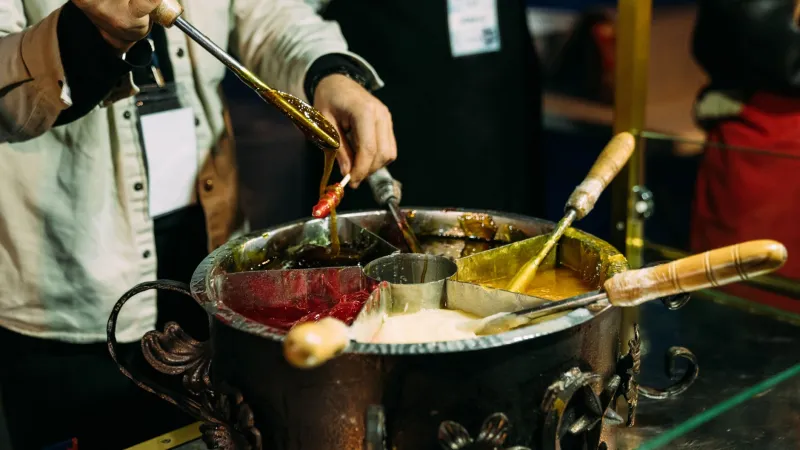
There's a moment, somewhere between the molten pour and the first ribbon of color being stretched across a hook, where hard candy making stops looking like cooking and starts looking like something else entirely. Sorcery, maybe. Or at least a really compelling reason to stand with your face pressed against a shop window for twenty minutes.
Old-world hard candy — the kind made by hand, shaped by touch, and finished with a knife rather than a machine — has been around for centuries. And while the industrial candy complex has largely moved on to faster, cheaper, more scalable methods, a small but fiercely dedicated community of American artisans never got the memo. Or maybe they got it and just didn't care.
What "Old-World" Actually Means in the Candy Kitchen
When people talk about old-world hard candy techniques, they're usually referring to a cluster of methods that trace their roots back to European confectionery traditions — particularly from England, Germany, and France — that were brought to the United States in the 18th and 19th centuries. These weren't recipes so much as physical skills, passed down through apprenticeships and practiced until the hands just knew what to do.
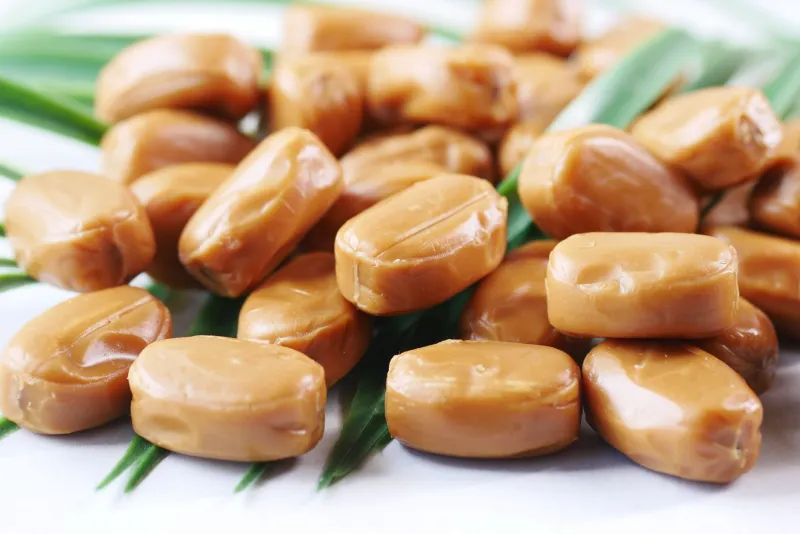
The core of it all is cooked sugar. Granulated sugar, water, and sometimes corn syrup are boiled to precise temperatures — we're talking 300°F and above, well into what candy makers call the "hard crack" stage. At that point, the sugar becomes a molten, glassy mass that's pliable for only a short window of time before it sets permanently. Everything that makes a piece of hard candy beautiful — its color, its shape, its layered pattern — has to happen in that window.
Sugar pulling is one of the most visually dramatic techniques. The cooked sugar is worked repeatedly over a hook or between the hands, incorporating air until it develops a satiny, almost pearlescent sheen. From there, it can be shaped into flowers, ribbons, or the kind of intricate, jewel-like decorations that sit on top of fancy pastries. It's hot, it's physically demanding, and it requires a level of tactile intuition that no recipe can fully teach.
Ribbon candy — that delicate, folded confection that shows up every Christmas and immediately shatters if you look at it wrong — is another old-world staple. It's made by layering different colored sugars, stretching them into a flat sheet, and then running the whole thing through a crimping machine or folding it by hand into those iconic accordion waves. The result is almost too pretty to eat. Almost.
And then there's pulled rock candy and hand-cut sticks — those striped, cylindrical pieces that look like tiny architectural columns. The stripes aren't printed or painted. They're built into the candy from the inside out, created by layering different colored sugar ropes around a center core before the whole thing is stretched and cut.
The People Who Still Do This
Across the country, a handful of shops have made it their mission to keep these methods alive — not as nostalgia projects, but as living, breathing craft practices.
In places like New England and the Pacific Northwest, you'll find candy kitchens where the work happens right in front of customers, behind glass or sometimes in fully open workshops. The transparency is intentional. These makers understand that watching someone pull sugar is half the draw. It's tactile and theatrical in a way that no amount of Instagram content can fully replicate — though plenty of people try, and honestly, the videos are mesmerizing.
Many of these artisans trained under older craftspeople or sought out apprenticeships in Europe before bringing those skills back stateside. Others are largely self-taught, piecing together technique from old confectionery manuals, YouTube rabbit holes, and a lot of burned batches. What they share is an obsessive attention to temperature, timing, and touch — and a genuine reverence for the process itself.
Some have expanded into teaching, offering classes and workshops that attract everyone from culinary students to curious home bakers who just want to know what it feels like to hold a rope of hot sugar. The demand for those classes has grown noticeably in recent years, which says something interesting about where people's heads are at right now.
Why This Renaissance Is Happening Now
It probably isn't a coincidence that handcrafted hard candy is having a moment at the same time that people are spending more time watching skilled makers do skilled things on their phones. There's a deep satisfaction in watching something difficult done well, and sugar pulling delivers that in spades.
But there's more to it than content virality. There's a broader cultural appetite for things that are made with intention — products where you can trace the craft back to a specific person, a specific set of hands, a specific choice about how to do something the harder but better way. Hard candy made the old-world way fits that craving perfectly. It's edible proof that someone spent real time and real energy making something beautiful.
There's also the flavor angle. When you're not cutting corners on process, you tend not to cut corners on ingredients either. Many of these artisan makers use pure cane sugar, real fruit extracts, and natural colorings. The resulting flavors are cleaner and more complex than the artificially flavored stuff that dominated candy aisles for decades. A well-made peppermint stick tastes like peppermint in a way that's almost startling if you've only ever had the mass-produced version.
What It Actually Takes to Learn
If you're romanticizing the idea of becoming a sugar puller yourself, it's worth knowing what you're signing up for. The learning curve is steep and the margin for error is genuinely unforgiving. Sugar cooked to hard crack stage is extremely hot, and working with it requires both speed and confidence — hesitate at the wrong moment and the whole batch stiffens before you've done anything useful with it.
Most serious practitioners recommend starting with a candy thermometer, a marble slab or silicone mat, and a whole lot of patience. Beginning with simpler poured candies before moving into pulling or shaping is the standard advice. And if you can find a class or a workshop near you, take it. There's simply no substitute for having someone experienced guide your hands through the process.
For everyone else — those of us who are more interested in eating these confections than making them — the good news is that the artisan hard candy scene is more accessible than ever. Small-batch makers sell online, show up at farmers markets and craft fairs, and maintain the kind of social media presence that makes it easy to find them wherever you are in the country.
A Sweet Worth Saving
Hard candy made the old way isn't trying to compete with modern confectionery on convenience or price. It's offering something different: a connection to a craft tradition that's genuinely at risk of disappearing, wrapped up in something that tastes incredible and looks like it belongs in a museum.
The artisans keeping it alive deserve every bit of attention they're getting — and then some. Next time you see a piece of ribbon candy or a hand-cut rock stick, take a second before you eat it. Somebody worked really hard to make that little thing beautiful. Then eat it, obviously. Life is sweeter with every bite.