Why Homemade Candy Hits Different: The Delicious Science Behind Every Batch You Make

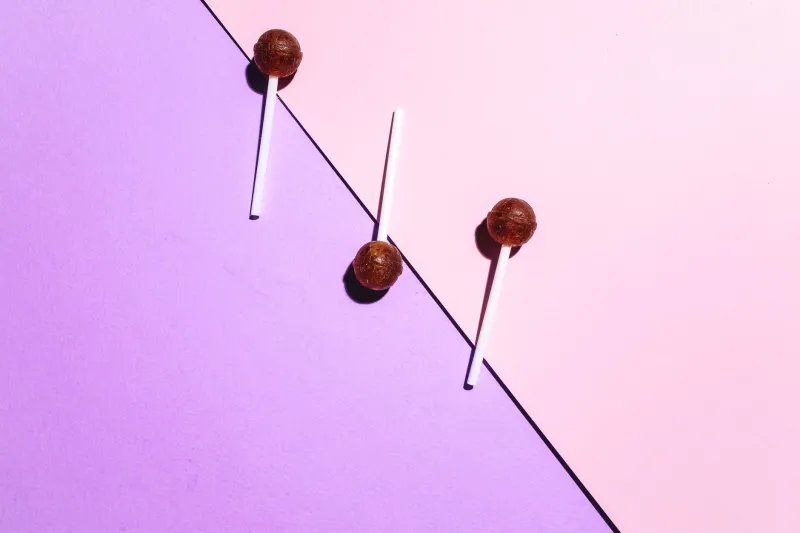
Photo by Photo by David Trinks on Unsplash on Unsplash
You've been there. You pop a piece of homemade fudge into your mouth at a holiday party, and suddenly the stuff you've been buying at the grocery store feels like a distant, inferior memory. It's not nostalgia talking — well, not entirely. There's actual science behind why the candy you make in your own kitchen can blow the mass-produced version clean out of the water. And once you understand it, you'll want to fire up the stove immediately.
Fresh Ingredients, Livelier Flavors
Let's start with the obvious: what goes in matters enormously. Commercial candy is engineered for shelf life, which means manufacturers lean heavily on preservatives, stabilizers, and ingredients chosen for durability rather than peak flavor. A bag of caramels sitting in a warehouse for three months before it hits the shelf is a very different creature from the batch you pulled off your stovetop this afternoon.
"Freshness is everything when it comes to fat-based candies like caramel and fudge," says one food scientist who works with artisan confectioners in the Pacific Northwest. "Oxidation starts the moment fats are exposed to air. In homemade versions, you're eating those compounds at their brightest — the volatile aromatic molecules haven't had time to degrade."
Think about it in terms of butter alone. Real, high-quality butter used fresh in a homemade toffee carries hundreds of flavor compounds — diacetyl, butyric acid, and a parade of esters — that contribute to that rich, complex taste. Industrial candy often substitutes cheaper fats or processes butter in ways that flatten those nuances. Your homemade batch? It's playing the full symphony.
The Maillard Reaction Is Your Best Friend
If you've ever made caramel or toffee and gotten that gorgeous amber color and deep, nutty aroma, you've witnessed the Maillard reaction up close. This chemical process — a cascade of reactions between amino acids and reducing sugars — is responsible for some of the most complex flavor development in all of cooking, and candy is no exception.
Here's where homemade candy gets an edge: control. When you're standing at the stove monitoring your sugar's temperature with a candy thermometer, you have real-time influence over how far the Maillard reaction goes. Commercial production lines are optimized for consistency and speed, which often means pulling the product before it reaches its most flavorful potential. Home cooks can push a little further, coaxing out deeper caramelization notes that mass production simply can't afford to risk.
Artisan candy maker Priya Desai, who runs a small-batch confectionery out of Austin, Texas, describes it this way: "I can smell when my caramel is exactly right. A machine can't do that. It hits a temperature and stops. I hit a temperature and then I use my nose, my eyes, my instincts — and that last thirty seconds makes all the difference."
Crystal Structure and the Texture You Can Feel
Candy science isn't just about flavor — texture is arguably just as important. And nowhere is this more apparent than in the microscopic crystal structure of sugar-based confections.
Fudge, for example, derives its signature smooth, melt-in-your-mouth texture from extremely fine sugar crystals. The process of beating fudge as it cools controls how those crystals form. Homemade fudge, made with care and attention, can achieve a crystal structure that creates a luxuriously smooth bite. Mass-produced fudge often relies on corn syrup and other additives as interfering agents to mimic that smoothness — functional, yes, but not quite the same experience your taste buds are looking for.
"When I teach candy-making classes, the moment people bite into their own fudge and feel that texture, their eyes go wide," says confectionery instructor and cookbook author Marcus Webb. "They've never had store-bought do that. And now they understand why."
Similarly, hard candy made at home — pulled and worked by hand — develops a slightly different crystalline structure than its factory counterpart, resulting in a clarity and snap that feels genuinely different on the palate.
The Psychology of the Homemade Advantage
Here's where things get really interesting. Even setting aside the chemistry, there's a powerful psychological dimension to why homemade candy tastes better — and researchers have actually studied it.
The "IKEA effect," a concept popularized by behavioral economists, describes our tendency to place higher value on things we've made ourselves. Applied to food, this translates into a genuine shift in sensory perception. Studies have shown that people consistently rate food they've prepared themselves as tastier than identical food made by someone else — even when blind tasting makes objective comparison difficult.
But it goes beyond pride of ownership. The act of making candy involves anticipation, sensory engagement, and a kind of mindful attention that primes your brain for pleasure. You've been smelling that caramel for twenty minutes before you taste it. You've watched the chocolate temper and bloom into a glossy finish. By the time that candy hits your tongue, your brain is already halfway to delighted.
"Anticipation is a flavor enhancer," notes one consumer psychology researcher who has studied food satisfaction. "The more sensory cues you've experienced leading up to the taste, the richer the experience tends to be. Homemade candy is almost always accompanied by a richer pre-eating sensory journey."
Practical Tips to Make Your Homemade Candy Even Better
So how do you actually leverage all this science in your own kitchen? A few principles go a long way.
Invest in quality ingredients. Real butter, good-quality chocolate, fresh cream — these aren't luxuries, they're the foundation of flavor. The Maillard reaction and fresh fat compounds only shine when the raw materials are worth working with.
Get a reliable candy thermometer. Temperature precision is everything. The difference between soft-ball and firm-ball stage is just a few degrees, and those degrees determine whether your caramel is chewy or rock-hard.
Don't rush the cooling process. Crystal formation in fudge and caramel happens during cooling. Patience here pays off in texture dividends you'll taste immediately.
Work in small batches. This is the artisan advantage in a nutshell. Smaller batches mean more control, fresher ingredients, and the ability to make real-time adjustments that machines simply can't replicate.
Taste as you go. This sounds obvious, but it's actually the most important thing. Your palate is the most sophisticated instrument in the kitchen. Use it.
The Sweetest Conclusion
There's no mystery to why homemade candy feels so special — there's just chemistry, psychology, and a whole lot of love poured into every batch. The science confirms what your taste buds already knew: when fresh ingredients meet careful technique and genuine attention, the result is something a factory line simply can't replicate. So the next time you're tempted to grab a bag off the shelf, consider making something instead. Your bonbons will thank you.