More Than a Sugar Fix: How the New American Candy Shop Became the Neighborhood's Living Room

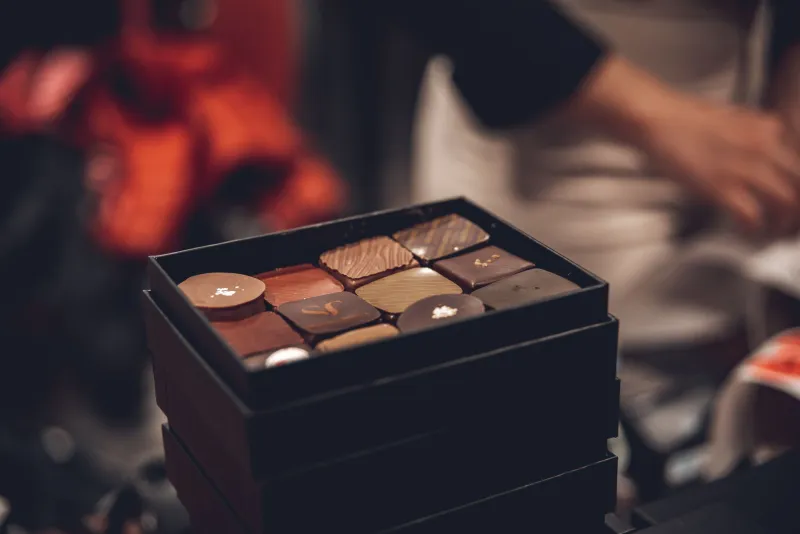
Photo by Photo by Pei Peng on Unsplash on Unsplash
On a Wednesday evening in Denver's Highland neighborhood, twelve adults are gathered around a long marble table, each holding a small piece of chocolate and looking at it with an intensity usually reserved for wine tastings. The instructor — Maya Torres, who owns the shop they're sitting in — is walking them through the vocabulary of cacao origin, asking them to notice the difference between a Peruvian bean and a Madagascan one. There's laughter. There are genuine expressions of surprise. At the end of the table, two people on what is clearly a first date are whispering to each other, smiling over their tasting cards.
This is Dulce & Co., and it is absolutely not the candy shop you grew up with.
Across the country, a new kind of sweet shop is quietly rewriting what it means to sell candy. These aren't just retail spaces with prettier displays — they're community anchors, event venues, date-night destinations, and neighborhood institutions that happen to sell chocolate. The transaction is almost secondary. What these shops are really selling is experience, connection, and a reason to show up.
Why Retail Alone Wasn't Enough
The economics of independent retail are brutal, and candy shop owners know this better than most. Competing with the convenience of online ordering, the scale of big-box stores, and the relentless price pressure of mass-market sweets requires more than a good product. It requires a reason for people to walk through the door that they can't replicate at home.
"I knew from the beginning that if I was just selling candy, I was done," says Torres, who opened Dulce & Co. four years ago after leaving a career in hospitality. "The shop had to be a place. Somewhere with a feeling. Somewhere people wanted to come back to even when they didn't need anything."
Her solution was to build an events calendar as ambitious as her product lineup. Chocolate tasting flights. Truffle-making workshops for date nights and bachelorette parties. Monthly "candy club" evenings where regulars gather to try new arrivals from small American makers. A rotating series of kids' candy-making classes on weekend mornings. The shop's revenue from experiences now rivals — and some months exceeds — its retail sales.
This model is playing out in cities from Nashville to Portland to Philadelphia. Independent candy shops are evolving into what retail analysts sometimes call "third places" — the spaces between home and work where community actually happens.
Designed to Be Felt
Walk into one of these new-generation candy shops and you'll notice immediately that the design is doing a lot of work. These spaces are built to be experienced, photographed, and remembered. Warm lighting that makes every piece of chocolate look like a jewel. Display cases arranged with the deliberateness of gallery installations. Color palettes that feel both nostalgic and contemporary. Neon signs. Marble counters. Walls that have been very consciously designed to be the background of someone's Instagram story.
This isn't vanity — it's strategy. In an era where a single viral photo can fill an appointment book for months, the visual identity of a space is as important as the product inside it. "I spent almost as much time thinking about how the shop would look on a phone screen as I did about the actual layout," admits Chris Nguyen, who opened Sweetstruck in Nashville's East Side neighborhood two years ago. "That sounds cynical, but it's just reality. If nobody can picture themselves here, they won't come."
What's interesting is that the most successful of these spaces don't feel cynically designed at all. They feel genuinely warm — because the owners building them are, in most cases, candy people who love what they do and want to share it. The Instagrammability is a byproduct of genuine care about aesthetics and experience, not a manufactured veneer.
The Community Part Is Real
Beyond the aesthetics and the event calendar, something more organic is happening in these spaces — and it's the part that seems to matter most to the people who own them.
In Philadelphia, Keisha Williams opened Bonbon Social three years ago with the explicit intention of creating a gathering space for her North Philly neighborhood. She hosts free community tasting events on the first Saturday of every month, partners with local schools for field trips, and reserves a corner of her shop for a rotating display of work by neighborhood artists. "I wanted this to be a place that belonged to the block," she says simply. "Not just a store on it."
The result is a shop where the regulars know each other by name, where people stop in not because they need anything but because they want to see who's around. Keisha describes watching strangers strike up conversations over a shared tasting of a new caramel, or couples who met at one of her chocolate pairing evenings come back to celebrate anniversaries. "That stuff doesn't happen in a regular store," she says. "It happens in a place."
Chris in Nashville tells a similar story. He's watched his shop become a de facto neighborhood living room — a place where the regulars show up on rough days as much as celebratory ones. "Someone came in last month and just said, 'I needed to be somewhere that smelled like chocolate and felt happy.' That hit me pretty hard."
Sweet Spaces, Serious Business
For all the warmth and community feeling, these owners are running real businesses with real pressures. The events model requires staffing, supplies, and significant time investment. Building a loyal local community takes years, not months. And the competition, even in this more experiential space, is intensifying as the model proves successful and more shops adopt it.
But the owners who've built this way seem genuinely unbothered by the competition. "Another great candy shop in my neighborhood would be a good thing," Maya Torres says with a shrug. "It means people think of this area as a destination for this kind of experience. That's good for everyone."
There's something almost old-fashioned about that attitude — the neighborhood shop owner who measures success not just in revenue but in relationships. And maybe that's exactly the point. In a world that increasingly conducts everything online and alone, the candy shop that becomes your neighborhood's living room is offering something genuinely rare: a sweet reason to show up in person.
And honestly? That sounds pretty delicious.