Wrapped in Time: Inside the World of America's Most Devoted Candy Collectors
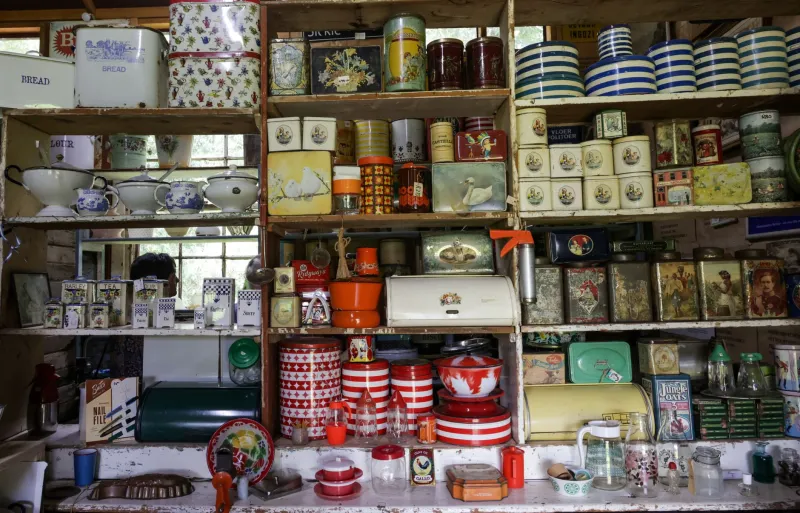
In a climate-controlled spare bedroom in suburban Columbus, Ohio, Denise Hartley has arranged 340 vintage candy tins in chronological order along custom-built shelving. Some date back to the 1920s. A few still have their original contents inside — sealed, preserved, and absolutely not for eating. "People think I'm hoarding," she laughs. "But I think of it more like curating a museum nobody's asked for yet."
Denise isn't alone. Across the country, a quietly passionate community of candy collectors has been building private archives of confectionery history — amassing everything from Depression-era penny candy packaging to sealed boxes of discontinued chocolate bars to limited-edition holiday releases that sold out in minutes. These aren't casual nostalgia hunters browsing flea markets on a Sunday. These are dedicated, methodical collectors who study auction records, maintain climate-controlled storage, and trade across international networks with the same seriousness you'd expect from a fine art dealer.
Sweet collecting, it turns out, is a very big deal.
More Than Just Old Wrappers
Ask most people what makes a candy collectible and they'll probably say age. But seasoned collectors will tell you it's far more nuanced than that. Rarity, condition, cultural significance, regional exclusivity, and manufacturer history all factor into what makes a piece genuinely valuable — or simply interesting.
Marco Villanueva, a Los Angeles-based collector who focuses primarily on mid-century American candy packaging, explains it this way: "A wrapper from a candy that only existed for two years in 1958 tells you something specific about that moment in American culture — what flavors people wanted, what colors were trendy, how companies talked to kids. It's social history printed on wax paper."
Marco's collection spans over 600 pieces, including what he believes is one of only a handful of surviving promotional displays from a now-defunct regional candy brand out of the Midwest. He found it folded inside a cardboard box at an estate sale in Indiana for $4. It's now insured for considerably more.
The categories collectors focus on vary wildly. Some specialize in holiday tins — Christmas, Valentine's Day, Halloween — chasing the intersection of seasonal nostalgia and graphic design history. Others zero in on a single brand, building near-complete archives of everything a manufacturer ever produced. A small but dedicated group collects sealed, unopened candy — products that have never been eaten and theoretically never will be.
The Investment Question
It would be disingenuous to pretend money doesn't enter the conversation. For some collectors, rare confectionery pieces have become genuine financial assets. A sealed, mint-condition box of a discontinued chocolate bar from the 1970s can fetch hundreds of dollars on specialty auction platforms. Vintage Halloween candy tins from well-known American manufacturers regularly sell for $150 to $400 depending on condition. A complete set of regional promotional candy items from a major mid-century brand? Potentially thousands.
But most serious collectors are quick to push back on the idea that investment is the primary motivation. "If I wanted a reliable investment, I'd buy index funds," says Patricia Okonkwo, a Houston collector who focuses on limited-edition artisan confections from the last two decades. "I collect because these objects matter. They represent craftsmanship, creativity, and moments in time that disappear fast."
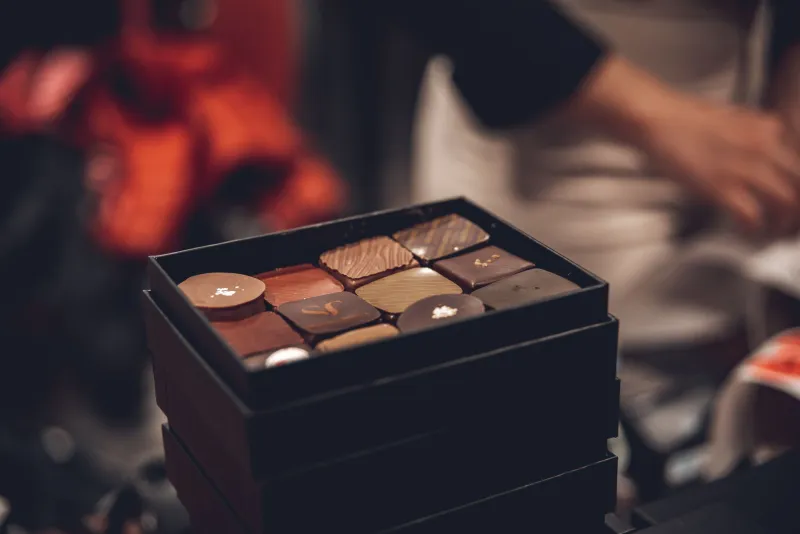
Patricia's collection is notably different from the vintage-focused crowd. She buys limited runs from small-batch American chocolatiers and candy makers — sealed, documented, and stored properly — specifically to preserve examples of contemporary artisan work before it vanishes. "Artisan candy is so ephemeral," she says. "A small maker produces 200 boxes for the holidays and they're gone. In 30 years, nobody will remember they existed unless someone saved one."
How Collectors Actually Do It
Building a serious collection takes more than enthusiasm. Temperature and humidity control are non-negotiable for anyone preserving actual candy — most collectors aim for around 65°F with humidity below 50%. Packaging-only collectors have slightly more flexibility but still protect their pieces from light and moisture.
Documentation is equally important. Serious collectors maintain detailed records: acquisition date, source, price paid, condition notes, and any provenance information available. Some photograph every piece against a neutral background and maintain digital archives. "Provenance matters enormously," Marco explains. "Knowing where something came from — who owned it, how it was stored — adds to both its historical value and its monetary one."
Online communities have transformed the hobby over the last decade. Forums, Facebook groups, and Discord servers connect collectors across the country, facilitating trades, sharing finds, and pooling historical knowledge. International connections are common — American collectors frequently trade with counterparts in the UK, Japan, and Germany, where confectionery collecting has even longer traditions.
What These Collections Actually Mean
There's something quietly profound about the idea of preserving candy. It's one of the most ephemeral things humans make — designed to be consumed immediately, enjoyed briefly, and forgotten. The candy collector inverts that logic entirely, insisting that these small, sweet objects deserve to be remembered.
"Candy is such an intimate part of American childhood," Denise reflects, running a finger along the edge of a 1940s Christmas tin she found in a Michigan antique shop. "Every one of these pieces connects to someone's memory. Someone's grandmother bought this tin. Someone's dad kept pennies in it afterward. I'm just the person making sure it doesn't disappear."
For a culture that tends to consume and discard at speed, there's something genuinely moving about that impulse. The candy collector isn't just hoarding sugar and nostalgia. They're making an argument — quietly, obsessively, one tin at a time — that sweetness is worth saving.