Taste Your Feelings: The Candy Makers Engineering Sweets That Hit You Right in the Emotions

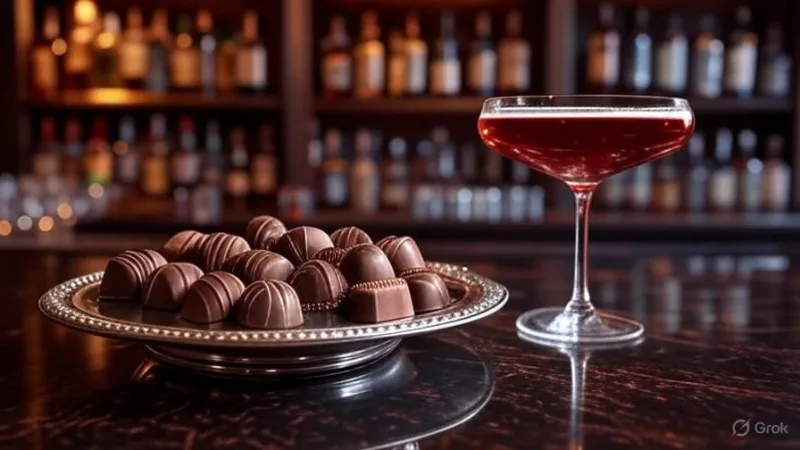
Photo: artisan chocolatier crafting bonbons colorful moody studio, via sm-vids.com
Close your eyes and eat a piece of candy. What happens?
For most people, flavor is just flavor — sweet, maybe a little tart, gone in seconds. But for a growing group of American candy makers, that moment between wrapper and swallow is an extraordinary opportunity. They believe flavor isn't just taste. It's memory. It's emotion. It's a direct line into the parts of your brain that feel things deeply — and they're engineering their confections accordingly.
This isn't pseudoscience dressed up in pretty packaging. The connection between smell, taste, and emotion is one of the most well-established phenomena in neuroscience. The olfactory system — which processes both smell and a significant portion of flavor — connects directly to the amygdala and hippocampus, the brain regions responsible for emotional processing and memory formation. In simpler terms: what you taste can make you feel things in ways that words or images simply can't replicate.
America's most innovative candy artisans are paying close attention.
Designing for a Feeling, Not Just a Flavor
Nadia Ferris runs a small bonbon studio in Portland, Oregon called Sensorium Sweets. Her menu reads less like a candy catalog and more like a mood board. There's a dark chocolate and cardamom piece she calls "First Frost" — designed, she says, to evoke the specific feeling of that first genuinely cold morning in late October. There's a honey-lavender caramel called "Sunday Slow" meant to replicate the unhurried ease of a weekend morning with nowhere to be.
"I start every new piece by asking: what do I want someone to feel?" Nadia explains. "Not what flavor do I want to make — what emotional state am I trying to create? The flavor comes second."
Her process involves building what she calls "emotional flavor maps" — layering primary tastes with aromatic compounds that have documented psychological associations. Vanilla, for instance, is widely associated with comfort and safety in American cultural contexts. Citrus tends to trigger alertness and positive affect. Warm spices like cinnamon and clove carry deep associations with celebration and home. "None of this is accidental," she says. "I'm basically composing music, except the instruments are flavor molecules."
The Science Behind the Sweetness
Dr. Rachel Huang, a sensory psychologist who consults with food brands on flavor design, confirms that what Nadia and others are doing has genuine scientific grounding. "Flavor memory is among the most powerful forms of memory we have," she explains. "A specific combination of taste and aroma can retrieve an emotional memory more completely than a photograph. Candy makers who understand this are working with extraordinarily powerful tools."
Some artisans are going even further, incorporating research on specific compounds. Saffron has demonstrated mood-elevating properties in multiple studies. Certain forms of dark chocolate support serotonin pathways. Rose has documented calming effects. The artisans who dig into this research aren't making medical claims — they're informed by it, using it as a creative starting point rather than a formula.
In Brooklyn, chocolatier James Adeyemi has built an entire product line around what he calls "mood bonbons" — small, single-bite chocolates formulated around specific emotional intentions. His "Clarity" bonbon pairs white chocolate with rosemary and lemon verbena. "Focus" uses a dark chocolate base with black pepper and espresso. "Ease" layers milk chocolate with ashwagandha-infused honey and chamomile.
"I'm not a pharmacist," James is careful to say. "I'm not treating anything. But I do believe that intention matters in food, and that if I'm thoughtful about what I put together, the person eating it will have a more meaningful experience."
Nostalgia as a Design Material
Perhaps the most emotionally potent tool in any candy maker's kit is nostalgia — and the artisans working in this space use it deliberately, sometimes surgically.
Rachel Moreno, who runs a one-woman confection studio in Austin called Sweetback Memory Co., specializes in what she describes as "personalized nostalgia confections." Clients fill out a detailed questionnaire about their childhood food memories — specific candies, holiday treats, smells from their grandmother's kitchen — and Rachel engineers a custom bonbon or caramel designed to recreate that emotional resonance.
"I had a client who talked about her grandmother's Mexican hot chocolate," Rachel recalls. "So I built a dark chocolate ganache with cinnamon, a tiny bit of chili, and this very specific kind of raw sugar that has a slightly molasses-forward flavor. She cried when she tasted it. That's the whole point."
Nostalgia, it turns out, isn't just sentimentality. Research consistently shows that nostalgic experiences increase feelings of social connectedness, meaning, and optimism. Designing candy to deliberately trigger it isn't manipulation — it's, as Rachel puts it, "giving people a door back to themselves."
What It Feels Like to Eat This Way
For consumers encountering emotionally engineered candy for the first time, the experience can be genuinely surprising. It's not that the flavors are unfamiliar — it's that they seem to land differently. More completely. With more resonance than a standard piece of chocolate.
Nadia from Sensorium Sweets describes customer reactions that range from wistfulness to unexpected joy to, occasionally, tears. "Food is the most intimate art form," she says. "It goes inside you. When you design for emotion, you're inviting someone to feel something real."
In a culture that increasingly values experience over product, and meaning over mere consumption, this approach to candy making feels less like a niche trend and more like a genuinely new direction. The bonbon as emotional object. The truffle as mood modulator. The caramel as memory made edible.
Life, as we like to say around here, really is sweeter with every bite — and it turns out there's a lot more to that bite than we ever realized.